A coaching client of mine recently opened up about his crippling fear of losing his job of three years at his current employer. He envisioned himself summoned to a meeting with his boss, who would extol his virtues as an asset to the team, but who would also inform him that he was being let go because of factors beyond his control. The thought of breaking the news to others made him grimace, and he worried about how difficult it would be to find a new job he enjoyed just as much. He was rattled.
Either the impending catastrophe or its aftermath is something that we have all experienced. Now it’s on full display at the Winter Olympics, but in a different arena. Athletes who have worked so hard to compete often suffer devastating defeats because they lose confidence or take a wrong step, which destroys their dreams.
What is the best way to deal with the emotions that come with the prospect of an unfavorable outcome or to bounce back from a devastating setback?
A fable often attributed to spiritual master Ram Dass came to mind for me as a result of this. The story is as follows: On the ocean’s surface, you can see two waves, one somewhat larger than the other. Suddenly, the larger wave starts to cry and grow quite distressed. The smaller wave inquires about the problem. The larger wave says, “You don’t want to know.” The little wave demands, “What is it?” to clarify. I don’t think so; it’s awful. You would be miserable if you knew the truth, just like I do. ” The little wave keeps going. At last, the massive wave provides an explanation: “You can’t see it, but I can see that, not too far from here, all of the waves are crashing on the shore.” Our disappearance is imminent. The small wave says, “I can make you happy with just six words, but you have to listen very carefully to them.” What does the little wave know that the huge wave doesn’t? Regardless, he is in a state of desperate denial. Finally, after much ridicule and skepticism, the larger wave begs the smaller one to tell him. So, the little wave continues, “You’re not a wave; you’re water.”
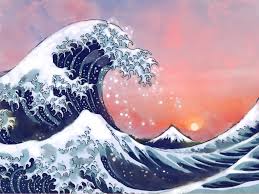 A sign of both strength and vulnerability, the wave can be seen as a metaphor for the ever-shifting nature of existence. Water doesn’t “die” when it forms a wave; rather, it transforms into something else, possibly serving a new function, but it is still water. Whatever we do (skier, marketing director, ice skater, coach, etc.) is secondary to how we show up to meet the challenges life presents. Recognizing that as individuals, we are a part of a greater whole, and our ultimate impact is determined by how we navigate what life has thrown our way.