
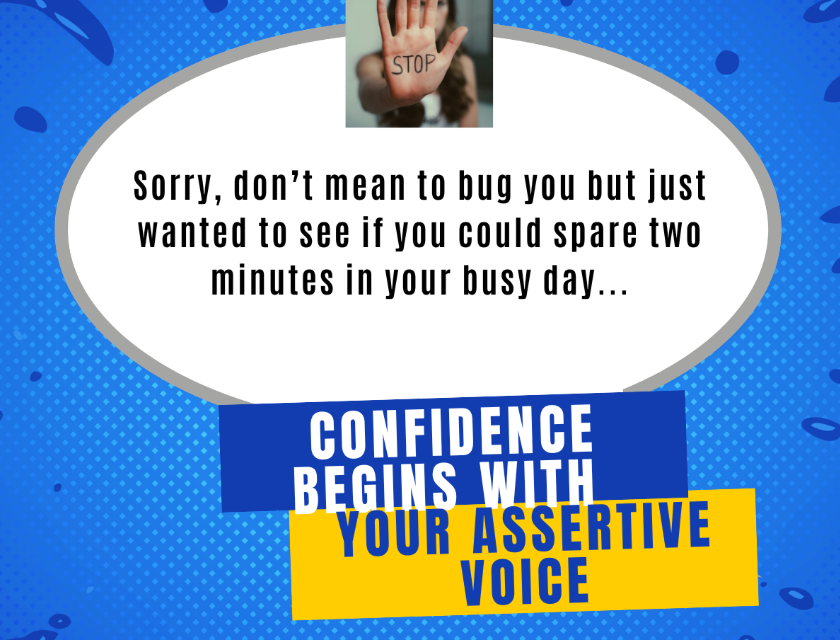
What does it really mean to be confident, especially when you’re speaking to others? It’s by far the most common goal I hear from clients: “I want to come across as confident.” But here’s the catch—confidence isn’t just a switch you flip at will. It’s an emotional state, a feeling that grows from knowing your strengths, understanding your limits, and truly being comfortable in your own skin.
So, how do you cultivate that aura of confidence that makes people listen and respect what you say? The secret ingredient here is assertiveness. Assertiveness isn’t about being aggressive or bulldozing your way through conversations—it’s about standing up for your ideas clearly and respectfully. It’s a tangible skill you can build with practice, and it shows up in how you phrase your thoughts and the energy you carry.
Trim the Wobbly Words
We often pepper our speech with “wobbly words” that cloud our message and betray uncertainty. Phrases like “I guess,” “I just wanted,” or “I sort of” all suggest hesitation, and when you want to sound confident, they’re big offenders. Try swapping them out with more decisive phrases—say “I know,” “I want,” or “I’ll ask.” These little shifts might seem small, but they pack a punch when it comes to how confident and clear you appear.
Check Your Apologies at the Door
Another common confidence sucker? Over-apologizing. How often do you catch yourself starting a question or request with, “Sorry to bother you, but…” or “Sorry, could you repeat that?” The reality is, you don’t need to apologize for wanting to communicate or understand. Instead, try stating your need plainly: “I need to speak with you,” or “Can you repeat what you said?” Try tracking just how many times you say “sorry” without a real reason in a day—you might be surprised how habitual it is. The moment you become aware of it, you’ll notice those unnecessary apologies start to fade.
Avoid Overexplaining
Sometimes we feel the urge to explain ourselves at length, especially when we perceive confusion or lack of engagement from our listeners. But here’s a paradox: the more you ramble on to get your message across, the less confident you often appear. Confidence thrives on clarity and brevity. Keep your answers and statements to the essentials. Trust that your message will land without a flurry of extra details.
Express: “I’m Confident”
This one’s delightfully simple but so effective. Next time you’re about to answer a question or make a statement, start with “I’m confident…” instead of hedging with “I think…” For example, instead of “I think you’ll find this report useful,” try “I’m confident you’ll find this report useful.” It’s a direct way to frame your message with certainty, and it invites others to take your words seriously.
Remember, confident communication exists somewhere between the extremes of passivity and aggression. It’s about mutual respect and clear expression. Assertiveness is the bridge that connects the strength of your ideas with the respect of your audience.